




Tripod Buying Guide
Tripods are a fundamental accessory for a variety of optics, but which one is right for you? For birdwatchers, hunters, cinematographers and photographers, these three-legged legends are a must-have in anybody's kit. Over the course of this guide we will discuss the pros and cons of each type. There are many factors to consider when choosing the right tripod, and from payload and carrying weight to its height, it can be overwhelming. Working out what you need before shopping makes selecting the right tripod that much easier.
Will it fit my ______?
We often get asked if a tripod will fit the product in question. It will. Tripods use two standard thread sizes:
- 1/4" standard: the normal, smaller thread used by most cameras, scopes and small lights. All tripod heads have it.
- 3/8" standard: the bigger screw, used for attaching the head to the tripod base and for very large and heavy products like teleprompters.
Tripod Size
The size of the tripod plays a big role in its usability. If you're going to be sitting down all of the time, or you're planning to put the tripod on a table, you don't necessarily need a full size tripod.
Most tripods can be considered one of three sizes:
Mini
These tripods are tiny, designed simply to hold something on a raised surface. They can also come in a flexible leg style used to wrap around branches and poles.
The Manfrotto Pixi pictured is the perfect, strong desk tripod.
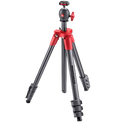
Compact
Compact tripods are for people who need a tripod they can take places. Their lower weight and compact size make them easier to carry long distances or stow in luggage. However, compact tripods will be less stable and have a much lower maximum payload than their full size counterparts.
Full Size
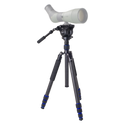
A full size tripod is designed with features first and portability second. They're incredibly stable, support heavier payloads than their more compact counterparts, and may have additional features that make them more comfortable or more convenient to operate.
Head Types
A tripod head controls the orientation of the mounted optic. Three main types exist, and each has pros and cons.
Ball Heads
A ball head fits the majority of photographers' needs and requirements, with the ability to adjust your camera to any angle, from extreme off-angles to perfect 180 degree angles. They are poor for video, as the tilt can be loosened by mistake. On higher end ball heads, the tilt and left/right movement are split to get around that limitation. Ball heads are also lighter, making them more portable and easier to handle.
Three-Way Heads
As the name suggests, three-way heads can move on each of their three axes independently. This allows a much finer degree of control while also reducing the risk of going askew while filming.
Video Heads
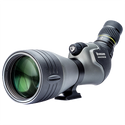
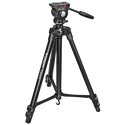
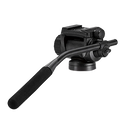
The ultimate in video support. Very sturdy, these heads move left/right/up/down for great panning video recording. Since they don't offer tilt adjustment for landscapes and other photography, they are not ideal for stills. Video heads are also used with spotting scopes, which require them for the payload and ease of use.
Carbon Fibre

Need to save weight without losing stability?
Carbon fibre is for you. Carbon fibre tripods are not cheap, but they offer a rigid, light tripod base that can't be matched using metal.
Still need more help?
Our staff are experienced experts and would be more than happy to talk about options for you. Please call or email us today, or browse our large range of tripods.