






























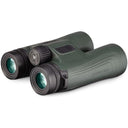
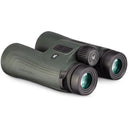


12× HD viewing
Bring distant detail closer with 50 mm objectives, XR Plus anti-reflection coatings and a 5.2° angular field. Locking focus adjustments and four-position eyecups help tailor the view to your eyes.
 Authorised Dealer
Vortex Talon HD 10K 12×50 Ballistic Laser Rangefinding Binocular. Jacobs Digital SKU VOLRFTLN1250; Vortex model LRF-TLN1250. HD optics, an Active Matrix Red OLED display, GeoBallistics and optional Vortex Relay connectivity.

HD optics · Laser ranging · Connected intelligence
Ballistic Laser Rangefinding Binocular
Read the landscape in greater detail. Bring 12× HD viewing, long-distance measurement and integrated GeoBallistics information together in one field-ready binocular.
VOLRFTLN1250 · VORTEX MODEL LRF-TLN1250

Magnification × objective diameter
Up to, on reflective targets
Customisable in-view display
Approximate weight with battery
A serious optical instrument
For open-country observation and demanding rangefinding, the Talon combines premium optical features with the information normally spread across separate devices. Its core functions remain available when your phone stays in your pocket.
Bring distant detail closer with 50 mm objectives, XR Plus anti-reflection coatings and a 5.2° angular field. Locking focus adjustments and four-position eyecups help tailor the view to your eyes.
Choose direct distance, horizontal distance or ballistic display modes. Separate target-priority options, continuous scanning and an extended-range mode help handle different subjects and conditions.
The GeoBallistics solver, environmental sensors and red OLED operate on the binocular itself. Optional app and Vortex Relay connections add profile management, updates and compatible-device data sharing.
Open-country observation
Talon-family field photography from Vortex. These images illustrate outdoor use; the exact specifications in this listing apply to the 12×50 model.


Explore the actual binocular
Inspect the controls, coated lenses, carrying system and real field-use photographs. Select a thumbnail to change the view; open the main image for a larger view with zoom.
Large objective lenses, a central focus wheel, locking ocular adjustments and dedicated electronic controls make this a substantial instrument. The photographs include the supplied GlassPak Sport harness and the complete manufacturer package.
The field photographs show additional support equipment. On a phone, swipe the thumbnail strip to reach every image.
Understand the 10K specification
Vortex publishes different maximum distances for reflective targets, trees and deer. These figures belong to the 12×50 model and describe capability under suitable conditions.
Published maximum capability
9,144 mReflective targets · published maximum
Up to 10,000 yards on a suitable reflective target. This is the headline maximum; results depend on the subject and conditions.
Illustrated categories and a comparison scale. Metric figures are converted from yards and rounded to the nearest metre.
Up to 10,000 yd / 9,144 m
The headline specification applies to suitable reflective surfaces.
Up to 4,200 yd / approximately 3,840 m
The 12×50 has a separately published tree-ranging maximum.
Up to 2,600 yd / approximately 2,377 m
Animal size, movement and coat reflectivity affect the returned signal.
Bright sunlight, rain, snow, fog, surface angle and movement can reduce the available range. Large, reflective objects generally return more light than small, dark or textured subjects.
The minimum laser range is 10 yd, approximately 9 m. The 10K name describes a 10,000-yard reflective-target maximum; it does not specify a 10,000-metre range or a guaranteed ballistic-solution distance.
The view comes first
The 12×50 configuration gives you more magnification than the 10×42 Talon, with a narrower field and a larger body. It suits buyers who prioritise distant detail and are comfortable carrying a substantial binocular.
The 50 mm objectives work with 12× magnification. Both the viewing detail and the steadiness of your support matter when assessing the image.
At 1,000 m
90.7 m wideApproximate horizontal scene coverage
Schematic calculated from Vortex’s published linear field of view. All figures are approximate.

Built for time behind the glass
At approximately 1.33 kg with its battery, the Talon 12×50 is a substantial binocular. Its supplied harness helps distribute the carried load, while a suitable tripod can support longer observation sessions.
A tripod and binocular adapter are separate accessories. The auto-levelling OLED refers to the display orientation; the binocular does not provide optical image stabilisation.
Active Matrix Red OLED
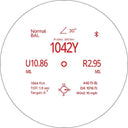
The electronic display appears in the right ocular. Its own locking focus adjustment lets you sharpen the readout separately, while automatic or manual brightness helps match the display to the conditions.

Shows the direct measured distance between the binocular and the subject.
Shows the horizontal component of the measured distance, accounting for inclination.
Combines line-of-sight range with profile-based information from the integrated GeoBallistics solver.
Updates the measured distance as you pan across the landscape, helping you see changes between objects.
Prioritises the strongest returned measurement for general ranging.
Prioritises a nearer returned distance when multiple objects are present.
Prioritises a farther returned distance when multiple objects are present.
Provides an option for difficult distant readings, with a potentially longer response time.
Helps obtain readings in adverse visibility. Weather and target conditions still affect the result.
GeoBallistics + Vortex Relay
The Talon has an onboard solver and controls, so a phone is optional for core operation. GeoBallistics and Vortex Relay provide additional ways to organise information, keep software current and share supported data.
The integrated GeoBallistics solver supports 10 profile slots, identified A–J. Up to 10 range cards, each with up to 10 entries, can be retained on the device.
GeoBallistics for Apple and Android devices provides profile management, supported data sharing and firmware updates. Optional accounts support conveniences such as backups.
Vortex Relay connects supported products in its ecosystem. Compatible external weather devices and remotes are separate accessories; support depends on the exact device and connection route.
Temperature
Air pressure
Humidity
Compass bearing
Inclination
Density altitude is calculated from environmental information. Wind speed is entered manually or supplied by a compatible connected source. The Talon does not contain a wind-speed sensor.
Vortex currently advertises a free GeoBallistics PRO unlock with a GeoBallistics-enabled product. Check current app compatibility and terms through the official downloads below.


Know the hardware
Use the manufacturer’s labelled diagrams to identify the physical controls, focusing rings and mounting points. The explanations below remain readable at phone sizes.


Powers the binocular on and triggers a distance measurement.
Opens settings, selects options and navigates the menu.
Refocuses the binocular view after setting the two focusing rings.
Sets the display’s sharpness for your right eye.
Balances the image focus for your left eye.
Four positions help set comfortable eye placement, with or without glasses.
Built-in sensors measure direction, inclination, temperature, air pressure and humidity.
Provides access to the wind and environment controls.
The underside cap secures the replaceable CR123 battery.
Accepts a compatible binocular adapter for supported viewing.
Side attachment points connect the binocular to its carrying straps.
The 50 mm objectives collect light; the ocular lenses are the viewing ends.
The round cover at the front of the bridge protects the tripod-adapter socket. The large ridged wheel between the oculars is the centre-focus control.

Comfort and fit
A good fit helps you use the full optical field and read the display comfortably. The Talon offers 18.5 mm eye relief, 58–76 mm interpupillary adjustment and four eyecup positions.
Adjust the hinged barrels for a single comfortable view. The 58–76 mm IPD range describes the spacing between the centres of your pupils.
The four twist-up positions accommodate different faces and eyewear. The manual generally suggests collapsed eyecups with glasses and extended eyecups without glasses.
The centre wheel sets the scene focus. A locking right reticle-focus ring sharpens the display, and the locking left diopter adjusts the other eye. Use the manual’s optical fitting sequence.
A suitable tripod and binocular adapter can steady the magnified view during longer sessions. Both are separate accessories.


Construction and practical ownership
A protected optical system, replaceable battery and familiar carrying options make the Talon a practical field instrument as well as a capable rangefinder.
O-ring sealing, nitrogen purging and rubber armour support Vortex’s waterproof, fogproof and shockproof construction claims. A numerical IP or immersion-depth rating is not specified.
One CR123 battery powers the electronics and is supplied. A low-battery indicator and selectable auto shut-off intervals help you manage power between outings.
The GlassPak Sport harness and Comfort Neck Strap are included. The tripod-adapter socket gives you an optional support route for longer viewing sessions.
The complete package
The standard manufacturer package supplies the binocular, its carrying system, lens protection and a battery. The included harness is the GlassPak Sport.


A tripod, compatible binocular adapter, remote, smartphone and external weather meter are separate items. The Talon can be used independently without adding another electronic device.
For long outings, consider a compatible spare battery and suitable coated-optics cleaning supplies. Use the support links below for help choosing compatible accessories.
Official Vortex video library
The five videos featured on Vortex’s Talon product page cover the introduction, product overview, setup, calibration and Relay connectivity. They load when you choose to play.
Vortex Optics · Watch on YouTube
Vortex Optics · Watch on YouTube
Vortex Optics · Watch on YouTube
Vortex Optics · Watch on YouTube
Vortex Optics · Watch on YouTube
The Talon family videos may show both magnifications and optional connected equipment. This listing and its specifications are for the 12×50 model.
Full technical specification
Model-specific figures from Vortex’s 12×50 product information and Talon HD 10K manual. Metric conversions are approximate where indicated.
Ranging figures are maximum capabilities for the specified target types. The linear field of view is 272 ft at 1,000 yd; its approximately 91 m at 1,000 m equivalent is a conversion. Exit pupil is calculated from objective diameter divided by magnification. Display features and supported connections can depend on the current firmware and app version. Vortex 12×50 product data and the manufacturer manual provide the source specifications.
Before you choose
Explore optical fit, real-world ranging, the display, software, power and accessories.
All 42 questions are available.
It combines fixed-magnification 12×50 optical binoculars, a laser rangefinder, an electronic data display, environmental sensors and an onboard GeoBallistics solver. It can operate as a standalone device or share supported information with the GeoBallistics app and compatible Vortex Relay devices.
The view is magnified 12 times, and each objective lens is 50 mm in diameter. These are fixed-magnification binoculars; 12×50 does not describe a variable zoom range.
The 12×50 provides more magnification, with a narrower field of view and a larger, heavier body. It weighs about 1.33 kg with battery, versus 1.16 kg for the 10×42. Its published tree and deer ranging limits are also higher. Both models share a 10,000-yard reflective-target maximum, 18.5 mm eye relief and a 58–76 mm IPD range.
No. It is an optical binocular with a laser rangefinder and electronic readout. No camera, video-recording, thermal-imaging or image-intensification function is listed. The red OLED display does not illuminate or enhance the landscape.
The 12×50 shows 272 feet across at 1,000 yards, or approximately 91 metres across at 1,000 metres. Its angular field is 5.2°. The 10×42’s wider field is useful when comparing how much landscape each model shows at once.
The published eye relief is 18.5 mm and the twist-up eyecups have four positions. The manual suggests collapsed eyecups when wearing glasses and extended eyecups without glasses, but the most comfortable position depends on your face and eyewear.
The interpupillary-distance adjustment covers 58–76 mm. This is the spacing between the centres of your pupils. Adjusting the hinge to match your eyes should give a single comfortable binocular view; people outside that range should check fit in person.
A central wheel focuses the optical view. The left ocular has a locking diopter adjustment, and the right ocular has a locking reticle-focus adjustment for the electronic readout. The published diopter range is ±4.0. These separate adjustments let the view and display be matched to your eyes.
The manual places the display in the right ocular and describes focusing it with your right eye. A switchable left-eye display is not documented. If right-eye readout is difficult for you, check the viewing fit before buying.
No. Auto-levelling refers to the display rotating approximately level as the interpupillary setting changes. It is not optical image stabilisation. A tripod or other suitable support can help steady the 12× view and longer-distance readings.
Optical close focus is approximately 7.6 m. The laser’s published minimum measuring distance is 10 yards, approximately 9 m. You may therefore be able to focus on an object that is too close for a valid laser distance reading.
The Talon combines its HD Optical System with XR Plus anti-reflection coatings on all air-to-glass surfaces. These support clarity and light transmission, while the optical view still depends on available light. The 12×50 combination has a calculated exit pupil of approximately 4.17 mm.
No. The headline maximum is 10,000 yards, equivalent to 9,144 metres, for suitable reflective targets. The 12×50’s stated limits are 4,200 yards for trees and 2,600 yards for deer. These are maximum capabilities, not guaranteed readings in every situation or a guaranteed ballistic-computation distance.
Target size, surface reflectivity, colour, angle and stability affect the returned laser signal. Bright sunlight, precipitation, fog and readings over water can also affect performance. A large reflective object may produce a reading at a much greater distance than an animal or dark, textured object.
LOS reports the direct measured distance. HCD reports its horizontal component with inclination taken into account. BAL combines line-of-sight ranging with profile-based information from the integrated GeoBallistics solver. These are different display functions, not three different optical magnifications.
Normal prioritises the strongest return. First prioritises a nearer returned distance, and Last prioritises a farther returned distance when multiple objects are present. They help select among available returns; they do not make the binocular see through solid obstructions.
ELR is an option for difficult distant readings when the standard mode does not obtain a useful return. It can require a longer response time, and Vortex recommends steady support such as a tripod. A universal acquisition-time figure is not specified.
No. It is intended to help obtain readings in conditions such as rain, snow, fog or dust, but Vortex still notes that adverse weather can reduce ranging capability. Waterproof construction and long-distance laser performance are separate considerations.
Scan provides continuously updated distance readings while panning across objects. It is useful for seeing how the measured distance changes across a landscape. It is a ranging feature, not video recording or an automatic subject tracker.
Yes. Standard, metric and custom unit options are available. The distance display can use metres or yards, and the supported weather units include Celsius or Fahrenheit. The app and binocular can have their own unit preferences.
Yes. The Active Matrix Red OLED offers automatic brightness or five manually selected levels. Supported information fields can be shown or hidden, and there are seven reticle choices. Some data fields are available only in BAL mode.
The binocular has dedicated Measure, Menu, Left Arrow, Right Arrow and Wind Bearing Capture controls. The arrow buttons navigate menus, and the Measure button powers the display and takes a distance reading. The named left/right buttons are navigation controls; they do not switch the display between eyes.
Handheld use is supported, but Vortex recommends a tripod for greater stability when measuring small objects at longer distances or using ELR mode. The binocular is tripod adaptable; a suitable binocular adapter may be required. A tripod and adapter are not included in the standard package.
The official 12×50 package includes the binocular, GlassPak Sport Binocular Harness, Comfort Neck Strap, tethered objective covers, Rainguard eyepiece cover, lens cloth and one CR123 battery. A tripod, binocular adapter, remote, phone and external weather meter are separate accessories.
Vortex backs the product with its VIP lifetime repair-or-replacement warranty. Published exclusions include loss, theft, deliberate damage and cosmetic damage that does not affect performance. The manual says registration, the original box and a receipt are not required for the manufacturer warranty. Contact Jacobs Digital for local service arrangements.
It uses one replaceable CR123 battery, and one is included. The published 1.33 kg weight includes the battery. Follow the manual’s battery instructions; a built-in USB charging system or compatibility with rechargeable substitutes is not specified.
The official product page and linked manual do not publish a guaranteed number of readings or operating hours. The display includes a low-battery warning at approximately 25% remaining life, and adjustable shut-off settings help manage power. Carry a compatible spare when reliable use over a long outing matters.
Yes. The manual lists seven auto-shut-off intervals: 5, 15 or 30 seconds; 1, 3 or 30 minutes; or 1 hour. The factory setting is 3 minutes.
Vortex describes the Talon as waterproof, fogproof and shockproof, with O-ring sealing, nitrogen purging and rubber armour. A numerical IP rating or rated immersion depth is not published in the product page and manual reviewed, so a specific diving or submersion claim should not be assumed.
Keep the supplied covers in place when the binocular is stored. Blow away grit before wiping lenses, and use cleaning materials intended for coated optics. The manual says the mechanism is permanently lubricated and should not receive additional lubricant. Avoid prolonged storage in direct sun or excessive heat.
The manufacturer’s compliance label identifies a Class 1 consumer laser product. Use it as directed in the manual, and never aim it at eyes or look at the Sun through the binocular. The classification does not mean deliberate exposure or misuse is appropriate.
No. Vortex describes the Talon as a standalone device, and the onboard controls, sensors and solver do not require another Relay device or the phone app. Online app features, such as cloud backups or downloading updates, have separate connectivity needs.
The built-in system is GeoBallistics. It supports editable profiles and displays profile-based information in BAL mode. Its results depend on the information supplied and the selected settings.
The Talon has 10 on-device profile slots, identified A–J. They can be managed through the binocular or the GeoBallistics app. The larger or unlimited library advertised for app accounts is separate from the 10 profiles loaded on the binocular.
The onboard range-card feature stores up to 10 cards with up to 10 entries per card. Saved cards can be retained on the device and managed through its controls or the companion app.
Built-in sensors measure temperature, air pressure and relative humidity. A compass and inclinometer provide direction and angle. Density altitude is calculated from the environmental values. Wind speed is not among the built-in measurements.
No. The manual describes wind speed and direction as manual inputs or data supplied by a compatible connected source. The compass helps keep track of a selected bearing as the binocular changes direction. This is different from having an onboard wind-speed sensor or measuring wind along the entire distance.
Vortex Relay shares supported information between compatible products in its own device family, such as Talon, Ace and Impact 4000, and the GeoBallistics app. The manual also describes a compatible optional Bluetooth remote. It is not a promise of compatibility with every Bluetooth product.
The manual describes supported Kestrel and WeatherFlow weather devices connecting through the GeoBallistics app to supply environmental data. That is different from assuming every model pairs directly with the Talon. Check your exact device and current app compatibility before choosing an accessory.
The companion app is GeoBallistics for Apple and Android devices. Bluetooth and the permissions requested by the app are needed for pairing. Check the current App Store or Google Play compatibility listing for your particular phone; the manual cautions that some older phone hardware may not communicate reliably.
The Talon works independently without an app account. The GeoBallistics app is available free, and Vortex currently advertises a free PRO unlock with a GeoBallistics-enabled product. An optional account provides conveniences such as backups. Check current app terms for available features.
Yes. The GeoBallistics app provides firmware information and available updates for the connected Talon. Use the official app and follow the displayed update instructions.

Long-term ownership
The Talon is backed by Vortex’s VIP lifetime repair-or-replacement warranty, subject to its terms. Registration, the original packaging and a receipt are not required for the manufacturer warranty.
Published exclusions include loss, theft, deliberate damage and cosmetic damage that does not affect performance. Contact Jacobs Digital for local service arrangements and help with accessories.
Jacobs Digital is a speciality on-line retailer, as well as a brick-and-mortar retail store, operating in the same Auckland, NZ location for over 40 years.
9 Mokoia Road
Birkenhead
Auckland 0626
New Zealand
+64 (9) 480-5903


Summer Sale is LIVE!


