





Magnifier Buying Guide
When one thinks of a magnifying glass, they tend to think of the big Sherlock Holmes style of lens. However, for actual use, you want a lightweight and powerful magnifier that has impeccable optics and is simple to use.
The basics

Magnifiers work by focus. The greater the magnification of the magnifier, the closer your eye and the object need to be to the lens.
Low power products are great for reading text, mid-range magnifiers are commonly used for rocks and stamps, and high power devices are used for gemstones and ultra-fine detail examination. More magnification is not necessarily better; you need the right magnification for the task at hand.
Magnification
With a wide range of magnification options available, from 2x up to 14x, it can be overwhelming deciding which one to purchase. Here are some basic magnification guidelines. Higher magnification also reduces the overall lens size.

2x magnification
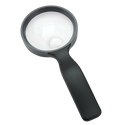
These are great for reading and come in large sizes, all the way up to A4. Normally in a handheld or page design, these portable units are the best for general purpose use.
A large page magnifier allows you to view a whole page at once easily.

3x–4x magnification
These are often spot lenses inside handheld units or in loupe designs, and are better at reading tiny text on things like contracts and maps. Normally, if they are standalone (i.e. not a spot lens in something bigger), they will also be very portable.
Fantastic for stamps and coins, a 4x magnifier will allow you to comfortably see detail normally at the edge of human vision.
5x–8x magnification
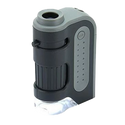
A fantastic hobby range, great for painting and inspection. Loupes and high powered handhelds are popular in this group. Very handy to have.

8x+ magnification
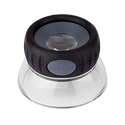
This covers all basic loupes and stand magnifiers. These have very small lenses and often require you to have your eye right up to the lens. If you're trying to view slides or inspect tiny marks on a flat surface, this is the range for you.
Being very small, it's perfect for looking at your old slides and negatives.
Types of magnifiers
Think about what would be best for your use when shopping our range. Here is a brief overview of the different types.
Stand or hands-free magnifiers
Stand magnifiers are helpful for reading books, magazines or stock pages, and for some writing tasks. Because they rest on the page and don't have to be held, they are ideal for those with tremors or for people who are not strong enough to hold a handheld magnifier for any length of time.
Handheld magnifiers
Ideal for reading menus, price tags, ingredients, thermostats or prescription bottles. They are available in a wide variety of designs and magnifications. Many are illuminated to provide additional light.
Video magnifiers
Video magnifiers are electronic magnification devices that are available in desktop and handheld designs, and enable you to modify the image of the object being viewed. Text colour (white letters on a black background, for example), brightness and contrast can easily be adjusted to make the object or text easier to see.
Video magnifiers provide many levels of magnification, from 1.5x to 50x. The portable video magnifiers are small and light enough to be taken to school, computer labs or senior centres.
Loupe magnifiers
A loupe (pronounced 'loop' in English) is a small folding or stand magnifier (from 12mm to 21mm diameter) of high magnification (usually about 10x), which folds into a case or is very small. These are used by jewellers for reading small marks and are often called jewellers' loupes.
Still need more help?
Our staff are experienced experts and would be more than happy to talk about options for you. Please call or email us today. With a great range of magnifiers, we are sure to have the right fit for your needs.