








How to Choose Binoculars for a Safari
Posted by Jacobs Digital on
The most important rule for your trip: You don’t need the most expensive model in the world, but you do want one suited to the bumpy, dusty, and low-light realities of an African safari. Let's break down exactly what that means.
- The First Number (e.g., 8x or 10x): Magnification. It tells you how many times larger the animal will appear compared to looking at it with your naked eyes. At 8x, an elephant 80 metres away looks like it's standing just 10 metres from your jeep.
- The Second Number (e.g., 42 or 50): Lens Size (in millimetres). This is the diameter of the front objective lenses—the wide glass ends pointing toward the wildlife. Larger lenses physically gather more light into the system allowing more detail to be visible.
Please click here for a link to our standard binocular buying guide.

Route 1: Oversized Lenses (50mm+)
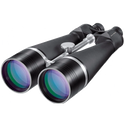
The Concept: Acts like a wide bucket catching rain. A 50mm or 56mm lens physically captures far more ambient photons than a standard 42mm optic.
Budget Impact: Standard glass with wider diameters delivers impressive dusk brightness in the accessible $150 – $350 bracket.
The Trade-Off: Heavy (850g – 1,100g+) and bulky. Bush flights in Kenya, Tanzania, and Botswana enforce strict luggage limits of 15 kg (33 lbs) in soft duffel bags, making bulky optics tough to pack.
Route 2: High Transmission (42mm ED/HD)
The Concept: Instead of enlarging the barrels, engineers apply Extra-Low Dispersion (ED) glass, phase-corrected prisms, and dielectric anti-reflective coatings.
Budget Impact: Precision lens grinding and specialised vapour coatings require cleanroom assembly, placing prices between $450 – $2,500+.
The Benefit: Outstanding dusk brightness in a trim 650g–750g body. It slips easily into daypacks and allows hours of fatigue-free handheld viewing.
| Factor | Oversized (50mm / 56mm) | Premium Transmission (42mm ED/HD) |
|---|---|---|
| Dusk Performance | High (raw glass surface area) | High to Class-Leading (optical efficiency) |
| Average Price | $150 – $400 | $450 – $2,500+ |
| Average Weight | 850g to 1,200g | 650g to 780g |
| Luggage Profile | Takes substantial bag room | Compact; fits hand luggage easily |
| Recommended For | Budget-focused safari goers; hides/lodges | Mobile 4x4 drives, walking safaris, bush flights |
Why 8x Magnification is Often Better Than 10x
Many first-time buyers assume higher magnification is always superior. However, 8x is widely considered the gold standard for game drives:
- Engine and Hand Tremors: Safari vehicles rarely cut their engines when trailing hunting game. At 10x magnification, every tiny engine vibration or hand shake is exaggerated on your retina.
- Field of View: An 8x lens gives you a wider panoramic vista, making it noticeably faster to spot a cheetah running across grasslands or a lilac-breasted roller flitting through thick thorn scrub.
Dust Sealing and Waterproofing
Savanna dirt is composed of extremely fine silica dust that easily penetrates unsealed gear. Always ensure your binoculars are nitrogen- or argon-purged and O-ring sealed. This ensures internal lenses never fog during sudden morning temperature changes and keeps dirt out of optical assemblies.
Eye Relief for Glasses Wearers
If you wear spectacles or sunglasses, look for twist-up eyecups with at least 15mm to 18mm of eye relief. Leaving the cups retracted allows your glasses to sit at the optimal focal plane without cutting off the edges of your view.

Reliable Field Starters
Ideal for first-time safari travellers seeking solid performance without a high upfront investment.
- Simmons ProHunter 10x50mm Binoculars: The Simmons has a robust rubber housing and a waterproof and fogproof design.
- Zerotech Vengeance 8x42 Binocular: This product comes with a lifetime warranty at an unbeatable price.
High-Transmission ED All-Rounders
The premier choice for most safari-goers—combining compact 42mm portability with high light transmission.
- Zeiss Terra ED 10x42 Black Binoculars: Features ED glass and proprietary Zeiss hydrophobic and anti-reflection coatings that repel savanna dust.
- Burris Signature HD 10x42mm Binoculars: ED glass in a double-hinged binocular design delivers robust, easy-to-hold performance.
- Kowa BD III 10x42 XD Binocular: Best-in-class field of view in a compact body design.
Lifetime Safari Glass
For enthusiasts wanting absolute optical perfection, 92%+ light transmission, and unmatched low-light clarity.
- Swarovski NL Pure 8x42 Binoculars: Field flattener lenses provide corner-to-corner clarity with unmatched low-light shadow depth. It's the pinnacle of binocular technology currently.
- Zeiss Conquest HDX 10x42 Binoculars: While it's a level down from the SFL, it still has a focus on low-light performance, which makes it ideal for safaris.
- Zeiss Victory SFL 8x40 Binoculars: Features a wide field of view and balanced-weight ergonomics that help to eliminate arm fatigue while being physically small.