










Camera Lens Buying Guide
In this guide we will go over what all the specifications mean, to help you choose an appropriate optic for you!
We will be covering this from a photographer's point of view and only touching lightly on each subject. Most photographers won't require this guide. It's aimed at new users who only have the basic kit lens and are looking for something better suited to what they shoot.
The lens is the most important part of your gear
It's what's really taking the photo. The camera records what the lens sees. Most of your image quality is coming from your lens, not your camera body.
Two lenses that seem superficially similar may vary greatly in price. For example, the Canon EF 50mm f/1.2L USM retails at over 10x the price of the Canon EF 50mm f/1.8 STM. Despite the similar focal length, the former offers far superior optics, resulting in less flare and better colour and contrast than similar lenses, in addition to other features like weatherproofing and an 8-blade circular aperture for excellent out-of-focus blur. With the extra cost also comes increased size and weight.
Colour and tone
Both of these lenses compete against each other, however as you can see, the Sigma renders colour and tones differently. It pays to look at lots of sample images before you choose. Things like colour and tone are really impossible to work out just by looking at specifications.
So many options

These are only the Canon branded lens range. The amount of optics available is staggering.
Now let's break it down
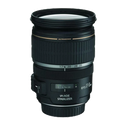
For this example, we'll use the Nikon AF-S 24-85mm f/3.5-4.5G ED VR. Each part of the name tells you something about the lens:
Nikon
This is the brand that makes the lens. A Nikon lens will only fit onto Nikon bodies, and the same applies to Canon. Tamron and Sigma are third-party manufacturers and will produce versions of lenses for all kinds of different cameras. Most camera manufacturers only make lenses for their own systems.
Nikkor
Since many of these camera brands are very old, they still label lenses with things like Nikkor or Fujinon. You can generally ignore this. As long as your mount is correct, it's going to work.
AF-S
This is the autofocus system. They come in lots of different types, from Canon's USM to Nikon's new AF-P system (not all Nikon cameras work with AF-P). If you're seeing something like this in the title, it has autofocus. Some manufacturers don't list this in the title anymore, so if unsure, read the full specifications of your lens or ask us.
Focal length: 24-85mm

This is the focal length, and it's really important. Focal length is going to determine how wide or telephoto your lens is going to be. The lower the number, the wider it is; the higher the number, the more "zoomed" it is.
If you see a hyphen ("-") in the title of a lens, it zooms. This Nikon lens has a range from 24-85mm, great for landscapes and portraits. You can use any focal length within the 24-85mm range.
Not all lenses zoom. Prime lenses are always at one focal length. The advantage of these is that they can operate at faster shutter speeds than zoom lenses, and are therefore great for sports-related photography.
Aperture: f/3.5-4.5
This is the aperture. The f stands for focal length, and the number following is a fraction of the focal length. This is why the aperture is often (but not always, as in this case) denoted with 'f/', e.g. f/1.2.

On the left, a high aperture was used (f/22). On the right, a low aperture was used (f/2.8).
"...the lens aperture is usually specified as an f-number, the ratio of focal length to effective aperture diameter. A lens typically has a set of marked "f-stops" that the f-number can be set to. A lower f-number denotes a greater aperture opening which allows more light to reach the film or image sensor."
Aperture controls the amount of light reaching the camera sensor. The bigger the "hole", the more light hits the sensor. It also influences depth of field to a degree. Higher numbers make the aperture smaller, keeping more of the scene in focus.
Glass and stabilisation: ED and VR
ED
This is the type of glass used. Not all brands will mention it.
VR
This is also quite important for longer focal lengths. It stands for vibration reduction, and helps counter hand shake, allowing for a sharp result with a slower shutter speed. If you only use your lens on a tripod, you don't need this.
Also, some cameras, like Olympus's mirrorless models, now have vibration reduction built into the camera, meaning that every lens attached will have some form of stabilisation.
Other brands use a different mark to show the lens has vibration reduction. Tamron uses VC and Canon uses IS.
Sensor size: FX
FX in Nikon's range stands for full frame. DSLR cameras typically come in two different sensor sizes: full frame, which is the same size as a 35mm film frame, or crop.
When a lens says it's 24-85mm, it's saying that it's 24-85mm on a full frame 35mm sensor. If you have a cheaper camera, you would have a crop sensor and would need to think about the crop factor. Canon's APS-C sensors have a crop of 1.6x; Nikon's crop is roughly 1.5x.
A couple of things that crop does not change
- Crop factor does NOT affect a lens's focal length.
- Crop factor does NOT affect a lens's aperture.
It does change your field of view though. A crop sensor sees less than a full frame sensor using the same focal length lens. For example, a 50mm lens on a Nikon crop sensor body would have the field of view of a 75mm lens, quite a bit narrower.
Still need more help?
Our staff are experienced experts and would be more than happy to talk about options for you. Please call or email us today, or browse our large range of camera lenses.